
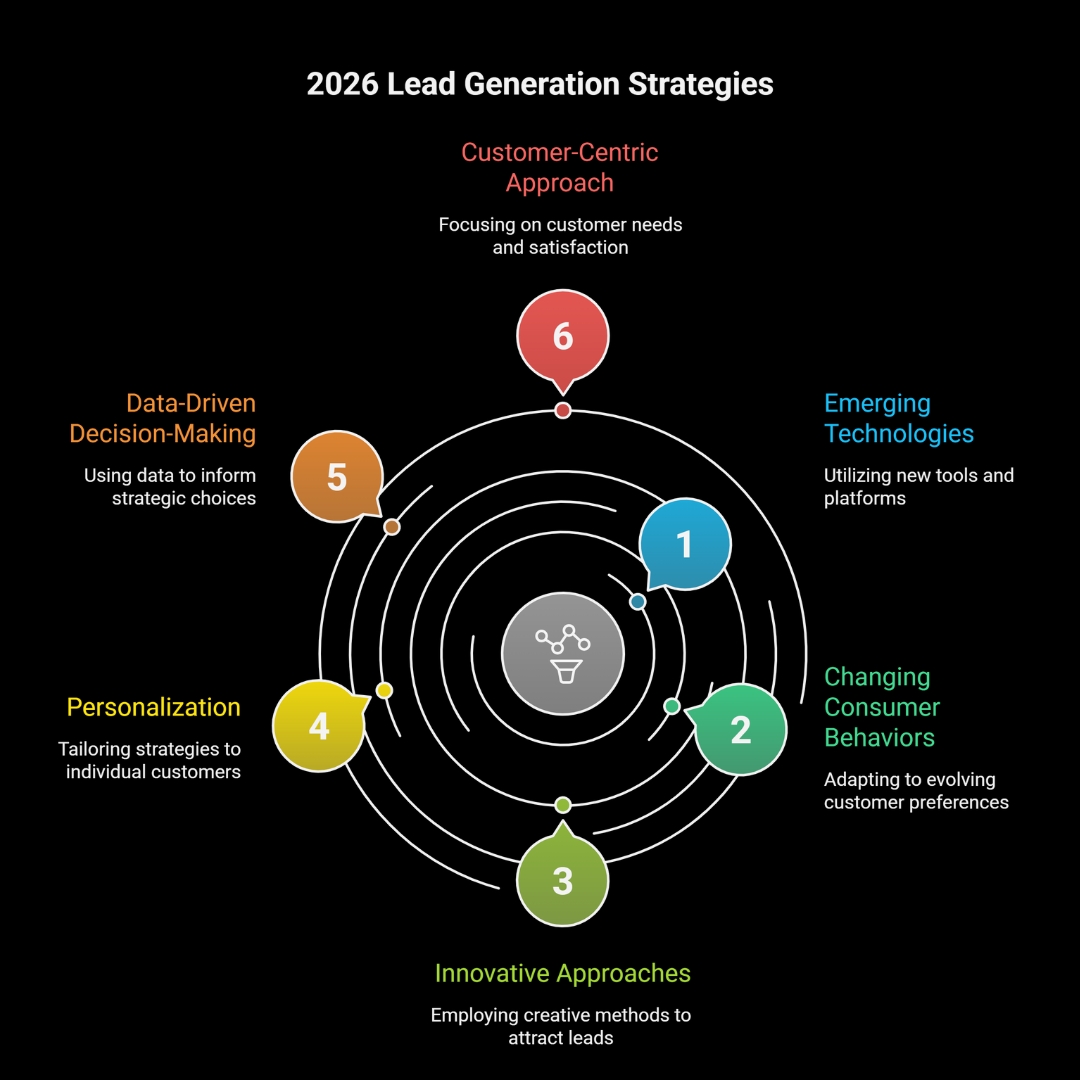
Lead Generation Strategies 2026 are redefining how businesses attract, engage, and convert potential customers. Remember when cold calling was the gold standard? Or when simply having a “Contact Us” form on your website was enough to fill your pipeline? Those days are fading fast.
As we look toward 2026, the way businesses find and connect with customers is shifting beneath our feet. It’s no longer just about casting a wide net; it’s about precision, empathy, and building trust at every touchpoint. Whether you are a small local business or a large enterprise, adopting modern lead generation strategies 2026 demands is no longer optional—it’s essential.
The good news? The tools available today are more advanced than ever. But tools alone won’t save you. To succeed, businesses must combine human insight with smart digital execution. Let’s explore how lead generation strategies 2026 will help businesses generate high-quality leads in the landscape of tomorrow.
Lead Generation Strategies 2026: Understanding the Modern Customer
The first rule of successful lead generation is knowing who you are talking to. The customer of 2026 is skeptical, informed, and incredibly busy. They don’t want to be sold to; they want to be guided toward the right solution.
By the time a prospect reaches out to your sales team, they have often completed over 70% of their research. They’ve read reviews, compared service providers, and explored your content. This shift means lead generation strategies 2026 must focus on trust-building long before the first conversation happens.
To truly connect, businesses need to meet prospects where they are in their decision journey. This approach—emphasized by firms like Buzzhive Marketing—prioritizes nurturing relationships rather than pushing immediate sales. In 2026, patience, credibility, and consistency define successful lead generation strategies 2026.
Understanding the 2026 Customer
The first rule of successful lead generation strategies 2026. is knowing who you are talking to. The customer of 2026 is skeptical, informed, and incredibly busy. They don’t want to be sold to; they want to be helped.
By the time a prospect reaches out to your sales team, they have likely already done 70% of their research. They’ve looked at your reviews, compared your pricing, and read your blog posts. This means your initial goal isn’t just to get their contact info—it’s to build trust before you even speak.
To truly connect, you need to meet them where they are. This concept of meeting customers at their level of awareness is central to the philosophy at Buzzhive Marketing, where they emphasize nurturing leads through a funnel rather than forcing a sale immediately. In 2026, patience pays off.
Leveraging AI and Machine Learning
Artificial Intelligence isn’t coming; it’s already here, and it’s the engine behind modern lead generation strategies 2026.. But don’t let the buzzwords scare you. At its core, AI is just about helping you work smarter, not harder.
AI tools can analyze vast amounts of data to identify who is most likely to buy from you. This improves your lead quality significantly because you aren’t wasting time on people who aren’t interested. For example, predictive analytics can score leads based on their behaviour, telling your marketing team exactly who to prioritize.
We see this in action with agencies like Beanstalk Consulting, which uses advanced data enrichment and AI to run outbound-to-revenue engines. Instead of manually hunting for prospects, technology does the heavy lifting, allowing humans to focus on closing deals.
Furthermore, AI is changing how we appear on search engines like Yahoo and Google. It’s not just about keywords anymore; it’s about intent. Companies like Omniscient Digital are pioneering the shift from simple SEO to holistic organic growth, ensuring that when you create content, it actually drives business growth, not just vanity traffic.
Content Marketing Evolution
Content is still king, but the kingdom has changed. You can’t just churn out 500-word articles and expect the phone to ring. Content marketing in 2026 is about creating immersive, valuable experiences.
Think about interactive content. Quizzes, calculators, and live demos are fantastic ways to engage users. People love to learn something about themselves or solve a specific problem. When you provide that solution for free, you earn the right to ask for their email.
Video is another massive player. Webinars, for instance, have evolved from boring slideshows into dynamic media channels. Platforms like Contrast allow modern software companies to turn webinars into a content goldmine, repurposing video into clips, blog posts, and social snippets in minutes. This efficient recycling of content ensures you are always present where your customers are looking.
Don’t forget the power of case studies about lead generation strategies 2026. Showcasing real-world success stories is one of the most effective ways to provide social proof. When a potential lead generation strategies 2026 sees that you have solved a problem for someone else just like them, their resistance drops.
Utilizing Social Media Platforms
Social media is no longer just for brand awareness; it’s a direct line to revenue. However, the strategy for 2026 isn’t about being on every platform—it’s about dominating the right one.
For B2B companies, LinkedIn remains a powerhouse, but the approach is more personal. It’s about founders and employees sharing insights, not just corporate logos posting press releases. For local businesses, showing up in local search results and maintaining a pristine reputation is vital. Major Impact helps local service businesses automate this process, turning social proof (like 5-star reviews) into a wall of trust that attracts new clients on autopilot.
Regardless of the channel, engagement is key. You need to respond in real time. If someone asks a question on Twitter or comments on an Instagram post, a delay of hours can mean a lost lead.
The Role of Personalization
If you treat every lead the same, you will lose them. Personalization is the secret sauce that makes your lead generation efforts stick.
This goes beyond just putting “Hi [Name]” in an email. It’s about tailoring the entire journey. If a visitor lands on your site from a link about “email marketing,” your landing page should speak specifically to email marketing challenges, not just your generic product offering.
Advanced tools now allow for dynamic website experiences. A visitor from a healthcare company might see different headlines and images than a visitor from a tech startup. Companies like Dynamic Web Development and i-Connect Web understand that the structure and responsiveness of your web presence set the stage for these personalized interactions.
Even in sales CRM platforms like Close, the focus is on managing relationships with context. Knowing exactly what a prospect has viewed or downloaded allows your sales team to have a relevant, helpful conversation rather than a cold pitch.
Measuring Success
How do you know if your strategy is working? You need to measure the right things. In the past, we obsessed over volume—how many leads did we get? But in 2026, the focus shifts to conversion rates with lead generation strategies 2026 and revenue.
Here are a few metrics to keep your eye on:
- Lead Quality: Are the leads you are getting actually qualified to buy?
- Time to Conversion: How long does it take to turn a lead into a customer?
- Cost Per Acquisition: How much are you spending to get a paying customer?
Tools like Breadcrumbs can help with lead scoring, ensuring you are focused on the data that matters. Similarly, consulting firms like Euskal Conseil can help businesses align their broader strategies with these specific metrics to ensure sustainable growth.
What is the most effective lead generation strategy for 2026?
There is no single “best” strategy, but a hybrid approach works best. Combine high-quality, educational content with AI-driven outbound outreach. Focus on building trust through social proof and solving genuine problems for your audience.
How can AI help with lead generation strategies 2026?
AI can help identify your ideal customers, personalize your messaging at scale, and automate follow-ups. It helps your marketing team prioritize the leads that are most likely to convert, saving time and money.
Why is social proof important?
Social proof, like reviews and case studies, builds credibility. In an era of skepticism, seeing that others have had success with your product reduces the perceived risk for new buyers.
How important is a landing page?
Crucial. A landing page is often the first specific interaction a prospect has with your offer. It needs to be fast, clear, and highly relevant to the ad or link they clicked on to generate leads effectively.
Should I buy lead lists?
Generally, no. Buying lists often results in low lead quality and can damage your sender’s reputation. It is far better to build your own list through inbound marketing or targeted, research-backed outbound strategies.
Adapting for the Future
The landscape of 2026 is exciting for those willing to adapt. The winners will be the businesses that stop chasing every new shiny object and start focusing on building genuine connections.
Whether you are leveraging AI to sharpen your targeting or using video to tell a better story, the goal remains the same: generate leads that turn into loyal customers.
Take a hard look at your current strategy. Are you broadcasting or connecting? Are you guessing or using data? It’s time to modernize your approach. Start small, test new tools, and remember—behind every data point is a person waiting for a solution. Make sure you are the one to provide it.